










Abstract Architecture: 4 Ways to Style Architectural Linework in Interiors
Architecture begins with a line. Before the walls rise or the materials take shape, every structure starts as a sketch; a series of strokes mapping out form, rhythm, and space.
Abstract architectural wallpaper captures that early creative moment. Through expressive lines, layered strokes, and rhythmic compositions, these designs translate the language of architectural drawing into interiors.
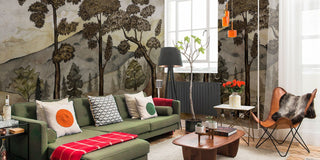
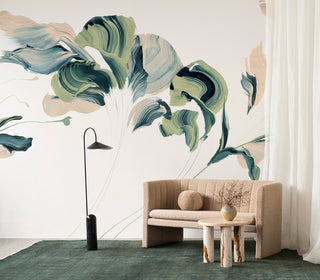
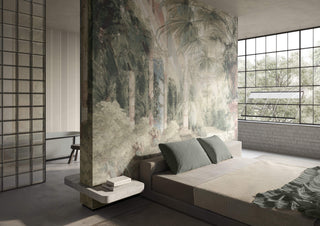
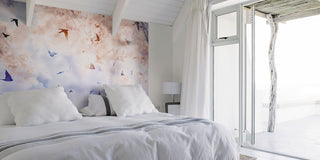
In this blog, we explore four ways to style abstract architectural wallpaper and bring its sense of movement and structure into modern spaces, using stunning visual examples from Glamora’s Creative Collection.
1. Create Structure Without Rigidity
Architectural interiors often rely on strong geometry: columns, beams, and structured layouts. But abstract architectural wallpapers reinterpret these elements in a softer, more expressive way.
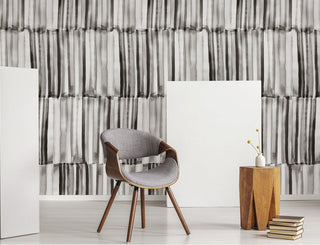
Instead of rigid grids, you’ll find flowing lines that suggest structure without imposing it. Fine horizontal strokes may be interrupted by curved forms or subtle vertical columns, creating balance while still feeling spontaneous.

This approach works beautifully in contemporary spaces where clean design is important but warmth and personality are equally valued. The result is a room that feels thoughtfully composed rather than overly strict.
2. Introduce Movement Through Linework
One of the most captivating qualities of abstract architectural patterns is the sense of movement they create.
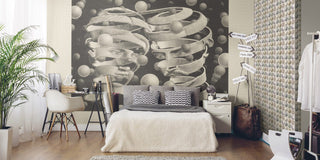
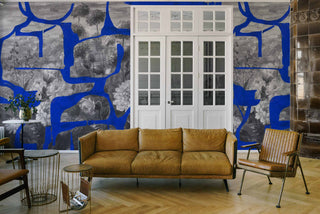
Sweeping strokes, looping forms, and intersecting lines give the illusion that the wall itself is alive with motion. These designs feel spontaneous, almost like a fleeting gesture captured mid-movement.
In a living room or hallway, this type of pattern adds visual energy without overwhelming the space. The eye naturally follows the lines as they move across the wall, creating rhythm and flow throughout the room.

Pair these expressive patterns with minimal furniture and sculptural pieces to allow the linework to become the visual centerpiece.
3. Layer Texture with Architectural Detail
While the designs themselves are minimal, abstract architectural wallpapers often create a rich sense of depth.
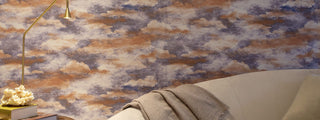
Fine metallic lines, textured backgrounds, and delicate contrasts between curves and straight forms give the wall a layered quality, almost like architectural drawings printed onto fabric or stone.
In spaces that already feature tactile materials such as linen upholstery, wood, or plaster, this type of wallpaper introduces a subtle architectural layer without competing for attention.

Used in dining rooms, home offices, or bedrooms, these patterns bring a quiet sophistication that elevates the entire space.
4. Let the Pattern Tell a Story
Some abstract architectural wallpapers feel almost musical in their composition. Lines appear in rhythmic sequences, repeating and evolving across the wall like notes on a score.
This sense of rhythm gives the design an emotional quality; less about literal architecture and more about the feeling of structure and movement.

These designs work particularly well in transitional spaces such as hallways, staircases, or entryways, where the movement of people mirrors the rhythm of the pattern itself.
Where Art Meets Architecture
Abstract architectural wallpaper sits at the intersection of art and design. It borrows the language of architectural sketches—lines, columns, gestures—and transforms it into something expressive and atmospheric.
Rather than simply decorating a wall, these patterns shape the way we experience a space. They introduce rhythm, movement, and structure in a way that feels both thoughtful and creative.
For interiors that value artistry as much as architecture, this style offers the perfect balance.
Explore abstract architectural wallpapers at NewWall today.