








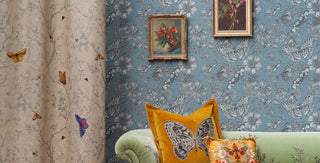
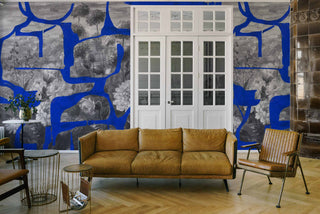


Ornament has shaped interiors for thousands of years. Across cultures and centuries, flowers, foliage, vines and geometric forms have been transformed into patterns that bring rhythm, movement and artistry to a surface.
To understand why ornamental wallpaper remains so compelling today, it helps to look at where its patterns began and how they have continued to evolve.
What Is Ornamental Design?
Ornamental wallpaper transforms decorative motifs such as flowers, leaves, vines and scrolls into patterns designed to flow across the wall. Through repetition, symmetry and intertwining forms, individual elements become part of a larger composition that creates rhythm and movement throughout a space.
Key: Botanical describes the subject; ornamental describes the composition.
Unlike botanical wallpaper, which may depict plants more naturally, ornamental wallpaper stylizes and arranges these forms into a structured repeat. Curling foliage, layered florals and continuous lines connect across panels, turning the wall into a cohesive decorative surface.


The Origins of Ornament | c. 3000 BCE to 500 CE
Long before wallpaper, nature inspired decorative pattern. Ancient Egyptians stylized lotus and papyrus motifs, while Greek and Roman designers used palmettes, scrolling vines and acanthus leaves in repeating compositions. This early approach of transforming nature through scale, repetition and rhythm remains central to ornamental design today.


The Arabesque and the Art of Continuous Pattern | c. 7th to 16th Centuries
Islamic art brought a sophisticated sense of repetition and continuity to ornamental design. By the 10th to 12th centuries, scrolling stems, leaves and interlacing forms developed into what became known as the arabesque. These continuous compositions allowed pattern to appear almost endless, a principle still fundamental to wallpaper repeats today.

PHOTO REFERENCE: The Metropolitan Museum of Art, Vegetal Patterns in Islamic Art.
Ornament Becomes More Elaborate in Europe | 1500s to 1800s
In Europe, ornamental design became increasingly elaborate through the Renaissance, Baroque and Rococo periods, with scrolling foliage, florals and sweeping curves shaping decorative interiors. By the 18th and 19th centuries, advances in wallpaper printing brought these detailed patterns to walls in richer colours and more sophisticated repeats, reaching new expression during the Victorian era.


William Morris and the Art of Wallpaper | 1860s to 1890s
William Morris was a British textile and wallpaper designer, artist and leading figure of the 19th-century Arts and Crafts movement. Born in England in 1834, he helped define modern ornamental wallpaper through stylized botanical compositions and intricate repeats. Beginning with Trellis in 1862, his designs wove flowers, leaves and stems into continuous patterns that became synonymous with the Arts and Crafts aesthetic. His influence spread internationally, establishing botanical ornament as an enduring language of wallpaper design.

VIDEO REFERENCE: William Morris, Victoria and Albert Museum.
Ornament in North American Interiors | 1920s to 1970s

By the early 20th century, ornamental wallpaper continued to evolve in North American interiors. Traditional florals and scrolling botanical forms were increasingly interpreted through new colour palettes, stylized forms and structured repeats. As the century progressed, wallpaper became more expressive, with mid-century florals and tropical motifs followed by the larger scale and bolder colour of the 1960s and 1970s.
Ornament on Screen: The
2000s to Today
Since the 2000s, ornamental design has taken on a fresh role in film and television, where patterned walls, decorative textiles and layered interiors help establish mood and character. Rather than feeling tied to a particular historical period, ornament is often mixed with unexpected colour, furnishings and contemporary influences.
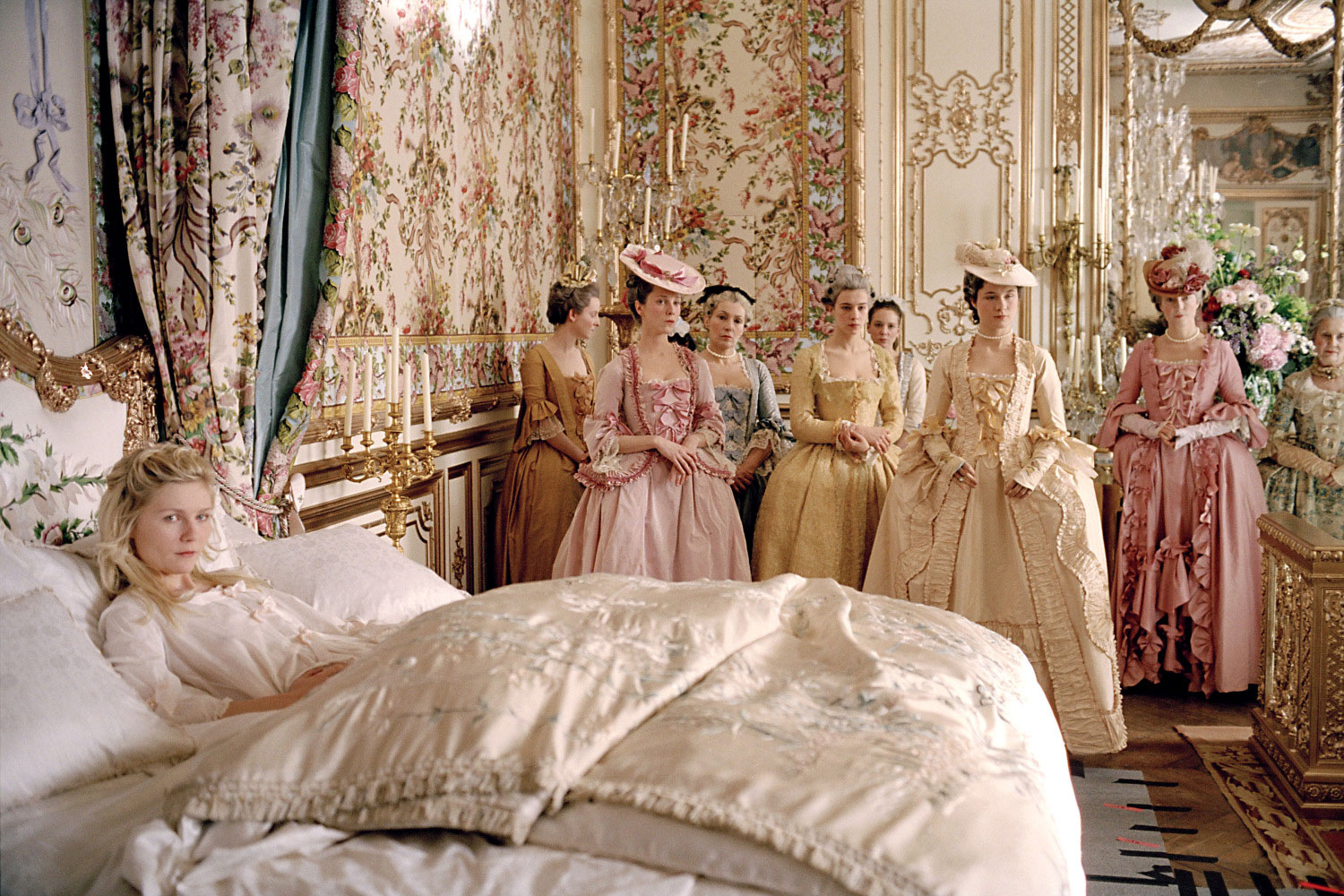
Films such as The Royal Tenenbaums (2001) used distinctive wallpaper and dense pattern to give each interior its own personality, while Marie Antoinette (2006) presented elaborate historical ornament through a playful, modern visual lens.

More recently, Saltburn (2023) returned to richly layered English interiors, where pattern, textiles and historic decorative details contribute to the atmosphere of an inherited country estate.

The production design of Only Murders in the Building (2021–) pairs historic architecture with botanical wallpaper, geometric patterns, rich textiles and saturated colour. Layered alongside contemporary furniture, art and lighting, the interiors show how ornamental wallpaper can feel distinctly current rather than traditionally styled.

These spaces show why ornament remains relevant today. Pattern can do more than decorate a wall. It can establish the personality and mood of an entire room.
Why Ornamental Wallpaper Still Feels Contemporary

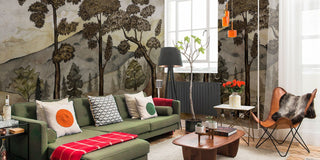
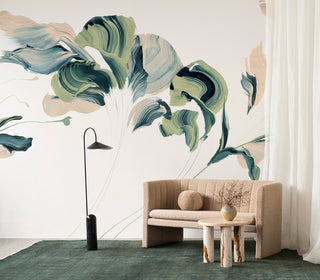
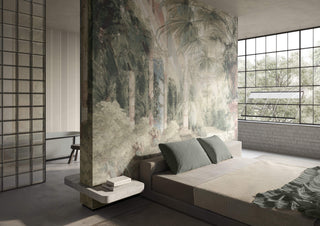
The language of ornamental design continues to evolve through contemporary wallpaper. Florals, arabesques, damasks and scrolling botanicals are reinterpreted through dramatic scale, unexpected colour and tactile materials. Small repeats can create rhythm and visual texture, while oversized motifs give flowers, leaves and scrollwork an architectural presence. Materials such as grasscloth, linen, textile and metallic surfaces add further depth, allowing pattern to interact with texture and light.
At NewWall, ornamental wallcoverings range from expressive and maximal to refined, tonal and textural. While their motifs may reference centuries of decorative tradition, contemporary palettes, materials and proportions allow them to sit naturally alongside clean-lined furniture and modern architecture.
Explore the NewWall collection and discover how ornamental wallpaper can bring pattern, depth and artistry to an interior.