








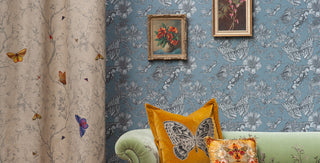
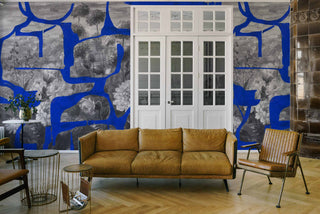


November changes the way we use our homes. We spend more evenings in, the light disappears earlier, dinners move indoors and the rooms we passed through all summer become part of our daily lives again.
I think this is why I am always ready for a change at home by this point in the year. Not a seasonal transformation or a reason to replace everything, but a few deliberate choices that make a room feel better to live in. There is a word for this that I have grown rather fond of: wintering.
Bring Back Deeper Colour
For years, we have been surrounded by very pale interiors. They photograph beautifully and there will always be a place for them, but winter makes a convincing argument for colour.
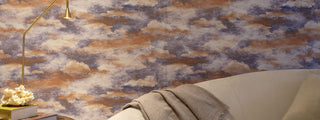
I am not necessarily talking about bright colour. The shades I am interested in right now are harder to define: tobacco browns, oxblood, muddy greens, aubergine, smoky blues and warm ochres. They have depth without demanding all the attention in a room.

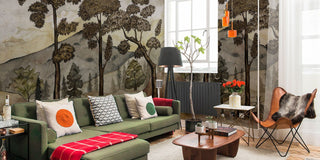
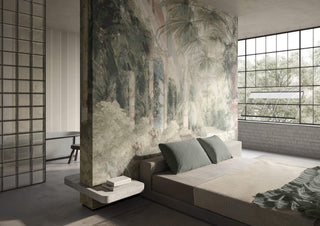
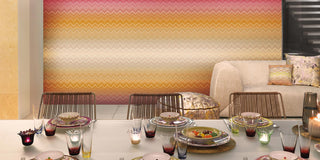
Dark colour is particularly effective in rooms we use in the evening. A dining room, library, powder room or bedroom can often take much more colour than we initially imagine. Wallpaper gives you another advantage because the colour isn't completely flat. Pattern introduces movement and variation, while textured and metallic surfaces respond differently as the light changes.
We are often warned that dark colour will make a room feel smaller, but I don't necessarily see that as a problem. There are rooms where a greater sense of intimacy is exactly what makes the space inviting, particularly during the colder months.
Design the Room for After Dark
We tend to make design decisions during daylight, although in winter we experience many of our rooms almost entirely after sunset.
Before choosing a wallcovering, I always want to see the sample in the actual room and leave it there for a few days. Something that feels one way in morning light can look remarkably different once the lamps are on.

This becomes particularly important with metallics, grasscloths and textured wallcoverings. A metallic detail may barely register during the day and become much more apparent beside a lamp in the evening. Texture creates shadows, deep colours become richer and even the scale of a pattern can feel different.
If you are refreshing a room for winter, I would consider the walls and lighting together. Try moving a lamp closer to the wall or introducing light at different heights instead of relying primarily on a ceiling fixture. You may discover that the room doesn't need another decorative object at all.
Choose Things That Show How They Were Made
The rise of AI has made me think differently about craftsmanship. We are becoming accustomed to images that can be generated almost immediately and perfected endlessly, and while I find the technology fascinating, it has also made me much more interested in things where the process remains visible.
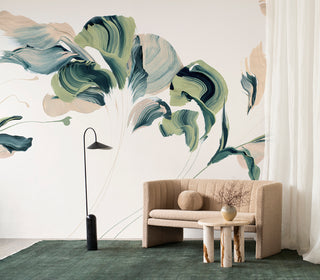
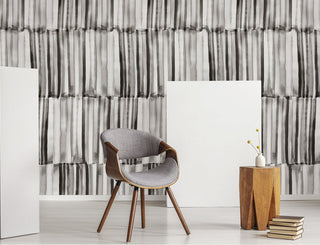
I notice the brushstroke, the hand drawn line, pigment that isn't perfectly uniform and patterns that began as photographs or paintings before becoming wallcoverings. These details give you some understanding of the person and process behind what you are looking at.

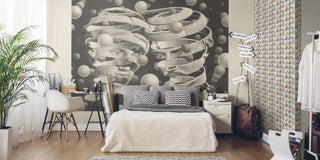
There are collections at NewWall where you can trace that journey from the artist's original work to the finished wall. Some begin as paintings, others as drawings, photographs or experiments with materials. That origin doesn't need to dominate the room, but I think knowing it is there changes the relationship we have with the finished piece.
When choosing something for a home, I think it is worth looking beyond the finished image and finding out how it came into existence. Knowing who designed it, what the original medium was and how that original work changed when translated onto a wall often makes the finished piece much more interesting to live with.
Let One Thing Establish the Room
One of the easiest ways to end up with a room that feels overly designed is to make every decision at once. I prefer to find one thing with enough character to establish the direction and allow the other choices to develop around it.

It could be a painting you already own, a wallpaper you cannot stop thinking about, an old chair, an unusual piece of stone or a textile brought home from somewhere. If the wallcovering is expressive, perhaps the furniture can be quieter. If there is already a lot of pattern, something restrained beside it may make the pattern more interesting. If everything in the room is new, something old can give it a different sense of depth.
This is especially useful with wallpaper because it is often treated as one of the final decorative decisions. Sometimes I think it should be one of the first. A wallcovering can establish the palette, scale and mood of an entire room, giving you something meaningful to respond to as the rest of the interior develops.
Allow the Room to Take Time
The idea of slowing down applies to decorating too. We see so many completed interiors that it is easy to believe a room should arrive at a finished state, but the homes I find most interesting usually feel as though they have developed gradually.

There is nothing wrong with waiting for the right artwork rather than buying something simply because a wall is empty. You can live with a wallpaper before deciding what belongs beside it, bring things home from travels, move furniture between rooms and keep something inherited even when it doesn't perfectly match.
This also makes it much easier to introduce pattern because the room doesn't have to subscribe completely to one aesthetic. A traditional wallcovering can sit beside contemporary furniture, something graphic can work with an antique and a dramatic mural doesn't require everything around it to be equally dramatic.
The common thread becomes the person who chose and collected these things rather than a particular period or prescribed interior style.
A Slower Home for Winter
My approach to wintering this year is less about transforming the house and more about becoming particular about what deserves a place in it.
There is something reassuring about approaching interiors this way, particularly now. Technology keeps making life faster and images more immediate, while a home still asks us to deal with physical things. Materials need to be touched, samples need to be seen in the room, art takes time to become familiar and the objects we keep eventually acquire associations that could never have been designed into them.
November is a good time to look again at the rooms we know we will spend the most time in over the coming months. Perhaps one could take a deeper colour than you previously considered, the lighting could be warmer, or an empty wall is finally ready for the pattern you have been thinking about. Wintering doesn't require redoing the house. A few considered decisions can be enough to make staying home feel like exactly where you want to be.