









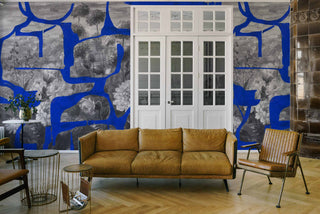


There is something wonderfully satisfying about finding an object you weren't looking for. I have always preferred interiors that feel collected over time. Rooms that bring together different periods and personalities, rather than everything belonging to one particular style.
I think this is why antique markets have such enduring appeal. Some are wonderful for an afternoon of casual browsing. Others have become destinations in their own right.
As December approaches, when our thoughts naturally turn to giving and gathering, I have been thinking about places where the pleasure of discovery is just as meaningful as the objects themselves.
1. Paul Bert Serpette | Paris, France
The origins of Paul Bert date to 1946, when secondhand dealers began establishing stalls on land belonging to the Poré family in Saint Ouen. In the early 1970s, antique dealer Alain Serpette transformed a former automobile garage into another market nearby. The two eventually came together to create one of the most celebrated destinations within the Paris flea markets.
Today, Paul Bert Serpette brings together everything from eighteenth century furniture to twentieth century design, sculpture and rare decorative objects.
What makes this market particularly interesting is its influence on the world of interiors. It is not simply somewhere to purchase antiques, but a place where collectors and decorators discover pieces that can shape an entire room.
2. Marché Biron | Paris, France
Established in 1925, Marché Biron has spent more than a century building its reputation as one of the most prestigious antique markets in Saint Ouen. Its two long aisles are lined with approximately 170 antique dealers and galleries, representing five centuries of decorative arts.
Collectors encounter period furniture, Renaissance paintings, elaborate chandeliers, Lalique glass and decorative objects of considerable historical significance.
It is a destination that attracts serious collectors, museums and established decorators.


3. The Sablon | Brussels, Belgium
The Sablon's antique market has a rather charming beginning. In 1958, a local antique dealer named Georges Van de Weghe approached the priest of Notre Dame du Sablon about displaying engravings after Sunday mass. The idea eventually grew into a formal antiques market, which opened on April 1960.
What makes the Sablon distinctive is the setting itself. Unlike a conventional flea market, the experience extends into the surrounding streets, where historic architecture, elegant galleries and the neighbourhood's longstanding appreciation for decorative arts create an atmosphere of quiet sophistication.
I have always admired the Belgian approach to interiors, particularly its confidence in combining aged materials with contemporary design.


4. Alfies Antique Market | London, England
Alfies opened in 1976, when entrepreneur Bennie Gray transformed the former Jordan's Department Store in Marylebone into an indoor antiques market. The original department store dated back to 1880, giving the building a commercial history long before its reinvention.
Named after Gray's father, who had been an antiques dealer himself, Alfies has grown into London's largest indoor antique and vintage market, with close to 100 specialist dealers.
Unlike markets devoted primarily to traditional period antiques, Alfies brings together collectible twentieth century furniture, vintage jewellery, decorative lighting and objects from different cultures.
You might discover a Venetian chandelier alongside a midcentury modern chair or an unusual decorative piece that feels entirely theatrical. I have always thought that London does eccentricity particularly well.
5. Hollywood Road | Hong Kong
Hollywood Road dates back to 1841, making it one of Hong Kong's oldest streets. Its association with antiques developed during the nineteenth century, when merchants traded Chinese artefacts and decorative objects. The trade expanded significantly during the twentieth century, particularly as valuable family possessions entered the market following political upheaval in China.
Today, the street remains known for its specialist antique galleries and longstanding connections to Asian decorative arts.
What makes Hollywood Road especially compelling is the depth of Chinese craftsmanship represented by its established dealers.
Antique hardwood furniture, porcelain, lacquerware and intricately carved objects reveal traditions that differ considerably from those found in European antique markets.


6. Hongo Art & Antique Gallery | Tokyo, Japan
Located in Tokyo's historic Hongo neighbourhood, Hongo Art & Antique Gallery brings together 15 specialist art and antique dealers under one roof. The surrounding district has a much longer history, having once been home to samurai residences and important cultural institutions, including what is now the University of Tokyo.
What makes Hongo distinctive is the remarkable range of objects represented by its specialist dealers. Japanese lacquerware, ceramics, bronze, paintings and traditional decorative pieces sit alongside Western furniture and fine art. It is a specialist antique gallery rather than a traditional flea market.
The Things We Choose to Keep
Perhaps what I appreciate most about these destinations is that they encourage us to look beyond what is new. There is a pleasure in discovering something that has already existed for decades, perhaps centuries, and imagining how it might become part of our own lives.
I think the same philosophy applies to decorating: A home does not need to be completed in a single season. It can evolve gradually, with each addition reflecting a different experience or a changing point of view.
And as another year draws to a close, I find myself thinking less about what is new and more about what is worth keeping.
Maria